 МЕНЮ
МЕНЮ
Typical solutions to environmental problems
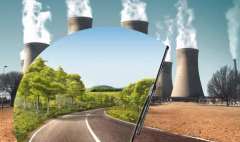
Environmental problems are varied, but they can all be summarized in one thing that is at least in our power to change, this is the degree of our impact on the environment. Simply put, the general solution to the problems of ecology is not to change its natural conditions in any way. It is impossible to do this completely, but it is quite possible to minimize it, and where possible, to make sure that this impact itself plays a positive role, creating an ecosystem more favorable for life. An example is a green desert or drained swamps.
The most decisive factor that allows the implementation of the system is the creation of a society or economy of sustainable waste-free consumption. Such an economy will initially take into account the entire chain, from creation to consumption of goods, so that each of all stages of satisfying a particular need causes minimal damage, and possibly even has a positive impact on the environment.
At the production stage, these are already well-known principles of non-waste production, to which we should add the ability to quickly and easily exchange certain resources between different manufacturers. This is facilitated by the system of contracts in the system with which it will be easy to sell and buy anything directly.
Food and packaging
As for the sale of products, if the product has any plastic packaging, some kind of container, then it should be returned to the supplier, so its cost should be high enough for it to be beneficial in itself. The manufacturer or retailer should be interested in reducing the amount of any packaging that is thrown away. This can be done by setting an additional margin on the materials or the plastic itself, from which the packaging is made.
An equally important factor for creating a market for non-packaged products is the creation of a full cycle of production at the place of consumption. Simply put, that all products are grown in one specific place. This is a rather important point, since the transportation of products in modern times, in terms of the amount of energy expended in calories for combustible and plastic packaging, can exceed the total calories received from the food itself.
Technique
As for household goods and all equipment, they are inventoried and their disposal provides for the mandatory delivery back to the manufacturer or to a special collection point. The incentive to which may be a fine for not returning back. So, on the contrary, an incentive in the form of a refund from the purchase, and the latter in this case should be included in the initial cost of the goods in order to compensate for the costs of accepting this obsolete product and delivering it to the appropriate place of processing.
And separately for the production of equipment, special requirements for maintainability are imposed on it. It is necessary to have such an opportunity so that repairs can be carried out on the spot yourself, without the availability of special expensive equipment.
Electricity
After optimizing human activity itself, we can move on to issues of increasing its efficiency, in particular, in terms of generating electricity, making it cheaper and at the same time also reducing the harm from its generation. These are issues of accessibility of technologies and in the existing scientific and technical bases, under which the system must optimize its consumption through economic regulation, in particular, if necessary, reduce and optimize its own energy consumption.
Separately, it is worth considering the damage from agriculture, in particular livestock. In this regard, measures to directly reduce the number of animals, control their population, for example, linking each animal to a specific person, are the primary solution. For example, each person has the right to have 1 cow himself, or to delegate his ability to have it to a livestock breeder who does this professionally. For this, he can receive money, or some part of the product of the cow itself in the form of milk, meat and other things. The same goes for all other pets.
As for vegetable agriculture, its regulation should depend directly on the soil and initial conditions, the restrictions should be that such activities do not worsen the initial quality of the soil, but improve it if possible, an example of this is the three-field crop rotation. And if economic activity improves the environment, for example, creates conditions for the permanent life of plants in the desert, then such activity should be stimulated.
As we can see, much in the system remains at the discretion of the person,
the system is only a tool that allows you to collect information and make decisions, but this tool still needs to be created, which implies the creation or adaptation of the economy itself, that is, human activity. Perhaps, in the early stages, due to competition with the existing economy, many of the indicated restrictions should be relaxed, since they will give the latter great advantages. But having already taken a significant share of economic activity, the participants in the system will have the opportunity to organize it properly, introducing all the rules required for the environment.
Personal transport and equipment
Personal transport and personal equipment in general, containing hydrocarbons, rare metals and other minerals, must be under production supervision, in case of failure at any time to be returned to the manufacturer. However, this also applies to any plastic packaging, it should not be thrown away forming garbage, but returned to the manufacturer for recycling.
Scale of natural value of resources
In the production of certain goods, we should be guided by the scale of the natural distribution of certain natural resources. And depending on how widespread these or those natural resources are, through the regulation of prices for them, the goods produced from them should be returned back.
For example, production from such common minerals as clay and sand may not be regulated at all in terms of sale and disposal. But as for plastic goods, they must be produced and sold in such a way that they can always be handed over, and this is quite profitable for both the seller and the buyer.
You might argue here that regulation is harmful and unfair. It will only be unfair when it is unfairly applied to different market participants. If regulation is fairly applied to all, both nature and society as a whole will benefit from it.
No trash
As a result, we must come to a state where we do not create any garbage other than organically degradable, that is, some kind of food leftovers, and possibly old clothes, if they are made of natural fabrics like cotton or wool. Artificial fabrics should be used minimally or also be returned and recycled. All those goods that we buy in packages should be sold, if possible, by weight and spill in their own containers.
Building materials
As for building materials, unused building materials should be deposited in a common warehouse. In which the suitability of their further use or processing is assessed. They are then either resold or recycled with minimal environmental impact.